Developing science communication skills should be part of every researcher’s training. Unfortunately, not many universities and research institutes put that much effort into this crucial skill.
Why should I coach you in science communication?
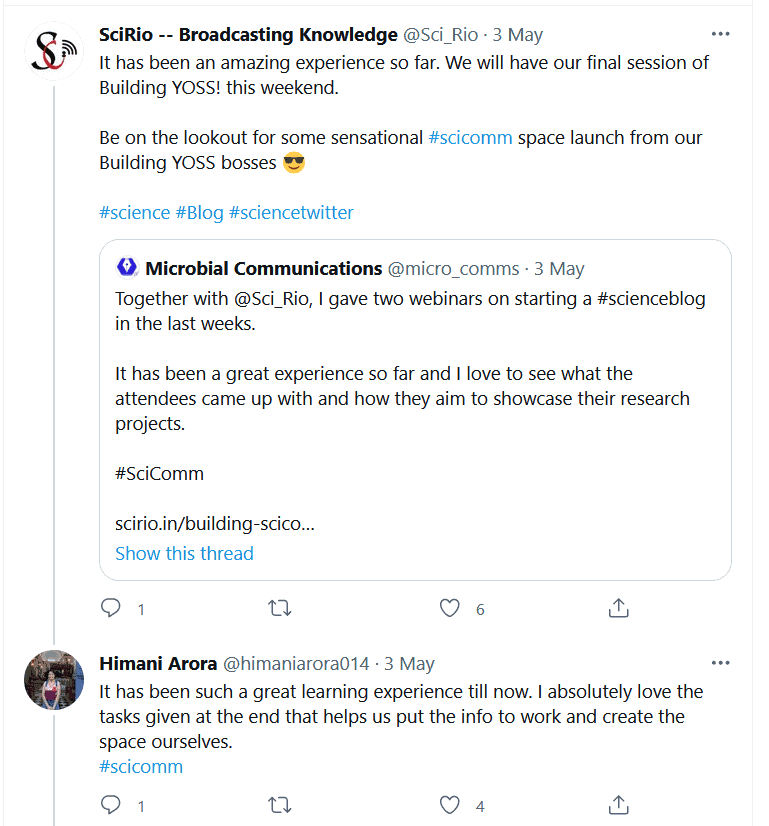
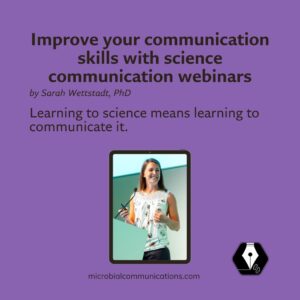
As a coach and co-founder of SciComm Society, I give science communication seminars and webinars to help you improve your communication skills so you can share your science with the world.
- Tell me about
- Your preferred learning format (webinar, 1:1 call, workshop, practical guides, videos)
- The audience (you as a scientist, a lab group, a group of diverse scientists)
- The topic you are interested in (general science communication, science writing, scientific storytelling, science blogging, social media science communication)
and I will recommend either practical self-learning material, a coaching plan or a mix of both
Who is science communication coaching for?
- Research group leaders who want to improve their lab members’ communication skills
- Lecturers preparing students to communicate science as part of their courses
- Organisations focused on science communication or science careers outside academia
- Conference organisers looking to add science communication training to their programme
How can I help you create your own scientific course?
Science communication coaching is not only about improving individual communication skills. Sometimes, you already have the expertise, teaching material or research content, but need support turning it into a clear and engaging learning experience for others.
With my scientific course and workshop strategy service, I help scientists, lecturers, research organisations and science-led businesses structure their knowledge into formats that make sense for their audience. This can include online courses, live workshops, webinar series, professional development sessions or self-learning resources.
This service is useful if you want to:
- Turn expert knowledge into a beginner-friendly course
- Structure a workshop around a clear learning journey
- Transform research material, talks or blog posts into teaching content
- Create session titles, learning objectives and module descriptions
- Plan exercises, reflection prompts, discussions or quiz ideas
Depending on your project, I can help you develop:
- A course or workshop outline
- Learning objectives and key messages
- A content flow from basic concepts to more advanced ideas
- Ideas for practical activities or interactive elements
- Companion material, reading lists or follow-up content
- Promotional copy to explain the course or workshop clearly
This is especially helpful for experts who know their topic deeply but struggle to see what beginners need first. As a science communicator, I bring an outside perspective that helps identify knowledge gaps, simplify explanations and build a structure that supports the learner step by step.
Examples of webinars, talks, workshops, courses and seminars I've delivered
What do others think about my science communication webinars?
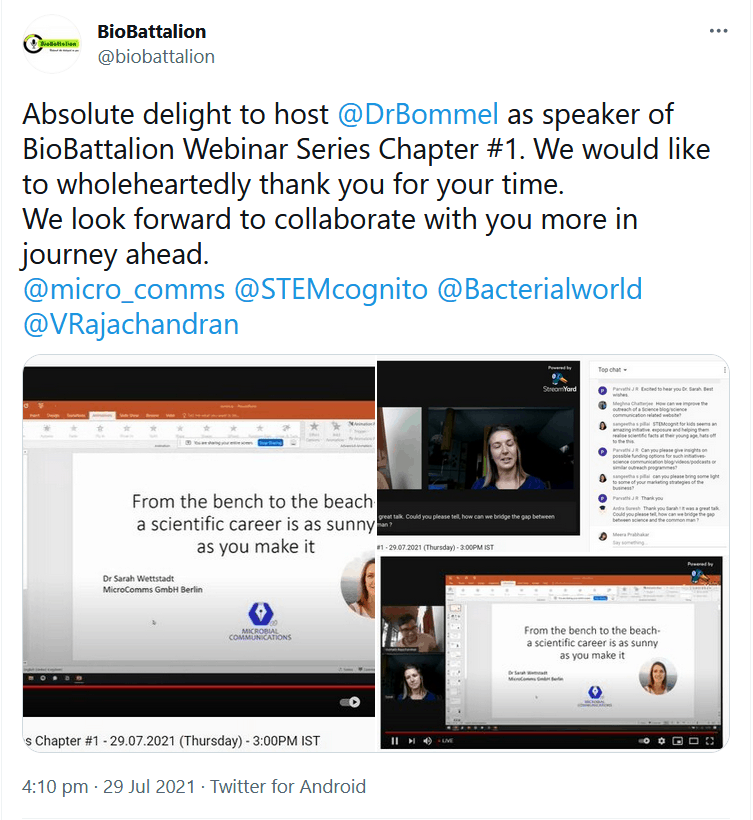
First of all, we would like to thank you a lot for your prompt email responses, support and full co-operation during the event. Sarah, as we came to know through her blog posts in 'Bacterial World' is by far one of the most passionate science communicators and writers we have met. Her ability to write scientific concepts and facts into easily understandable laymen language was the primary reason we found to invite her for a cience communication webinar. It is indeed great to see her contributions as the Director of MicroComms on educating people about the need to speak about microbes, and also as the co-founder of STEMcognito, a platform that hosts STEM related videos. Thank you Sarah, for introducing us to STEMcognito. In short, we are really happy and delighted to have her with BioBattalion and would really look forward to having more discussions and collaborations with her in future as well. All the best for your future endeavours.
Vyshakh Rajachandran Centre for Health Science and Technology (CHeST)